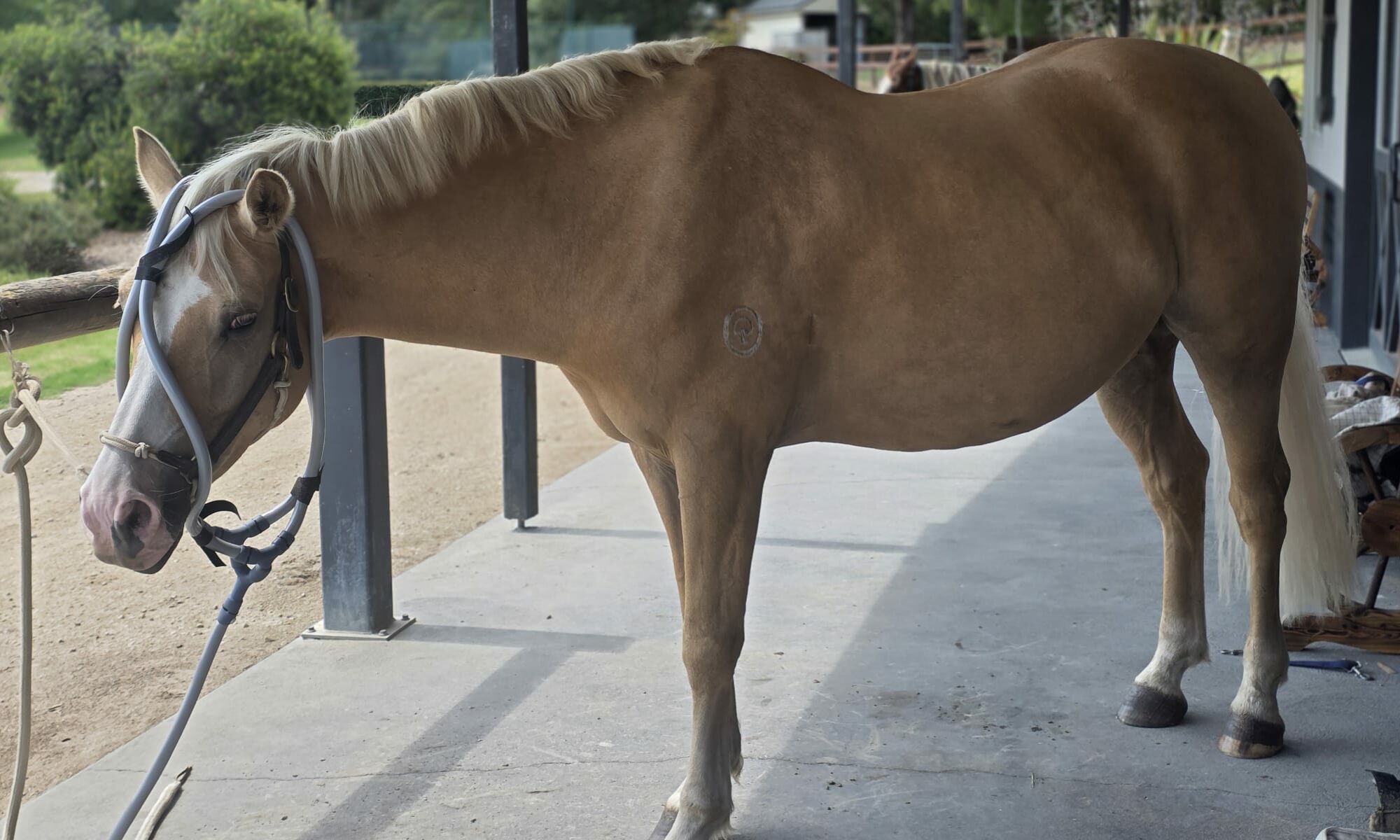


Kissing spine is a condition that can affect a horse’s comfort, movement and performance. It is often discussed when a horse becomes sensitive through its back, struggles with certain movements or develops unexplained behavioural changes under saddle.
But what exactly is kissing spine, how is it diagnosed, and what can be done to help a horse living with this condition?
At LMentz of Pulse, I believe understanding the condition is an important first step in supporting a horse’s comfort and wellbeing.
What is kissing spine?
Kissing spine, medically known as overriding or impinging dorsal spinous processes, occurs when the bony projections along the top of a horse’s vertebrae sit unusually close together or touch one another.
These projections are called spinous processes. They extend upwards from the vertebrae and provide attachment points for muscles and ligaments that help support and move the back.
When the spaces between these bones become narrowed, contact and associated changes may contribute to inflammation, discomfort and restricted movement in some horses.
However, not every horse with kissing spine visible on an X-ray experiences pain. Some horses have significant-looking changes with few symptoms, while others experience considerable discomfort. Veterinary assessment is needed to determine whether the findings are likely to explain the horse’s problems.
What causes kissing spine?
There is not always one clear cause. Several factors may contribute to the development of the condition, including:
- Conformation: The shape and spacing of the vertebrae may influence how the back functions.
- Back muscle development: Weakness or poor coordination of the supporting muscles may affect how the horse carries itself.
- Training and workload: Repeated loading and the demands placed on the back may contribute to symptoms in susceptible horses.
- Saddle fit: An unsuitable saddle can cause discomfort and may contribute to altered movement, although it does not explain every case of kissing spine.
- Other musculoskeletal problems: Hindlimb lameness, pelvic discomfort or other conditions may change how a horse uses its back.
It is important not to assume that kissing spine is caused by poor riding or incorrect training alone. Every horse needs to be assessed individually.
Signs and symptoms to look for
Kissing spine can present differently from one horse to another. Some signs are physical, while others appear as changes in behaviour or performance.
Common signs may include:
- Sensitivity when being groomed or having the back touched.
- Pinning the ears, biting or threatening when being saddled.
- Reluctance to move forward under saddle.
- Bucking, rearing or other resistance during ridden work.
- Difficulty with transitions, bending or maintaining a consistent way of going.
- Reduced engagement of the hindquarters.
- Difficulty jumping or a change in jumping performance.
- Stiffness or reluctance to work in certain movements.
- Changes in behaviour that appear during riding or handling.
These signs are not unique to kissing spine. Dental pain, gastric disease, saddle discomfort, limb lameness and other conditions can produce similar behaviours.
A horse displaying these signs should not automatically be labelled naughty or difficult. Pain and discomfort should be investigated before assuming the problem is behavioural.
How is kissing spine diagnosed?

A veterinarian will usually begin with a detailed history and physical examination. Depending on the horse’s symptoms, assessment may include:
- Back examination: Checking for sensitivity, muscle changes and restricted movement.
- Lameness assessment: Looking for problems elsewhere in the body that may be contributing to back pain.
- Imaging: X-rays can show the spacing and shape of the spinous processes.
- Further investigations: Additional tests may be recommended to help determine whether the imaging findings are responsible for the horse’s symptoms.
A diagnosis should be based on the whole clinical picture, not an X-ray alone.
Treatment and management options
The right management plan depends on the severity of the symptoms, the horse’s overall health and whether other problems are present.
Veterinary treatment
Your veterinarian may recommend medication or other treatments to manage pain and inflammation. In some cases, surgery may be considered when conservative management has not provided adequate improvement.
Treatment decisions should always be made with the veterinarian responsible for the horse’s care.
Rehabilitation and exercise
A structured rehabilitation programme may help some horses improve their strength, coordination and ability to carry themselves comfortably.
Depending on the individual case, this may involve:
- Gradual rebuilding of topline and core strength.
- Controlled groundwork and carefully selected exercises.
- A progressive return to ridden work when appropriate.
- Reviewing training demands and allowing suitable recovery time.
- Addressing hindlimb lameness or other contributing problems.
Exercise should not be forced through pain. A horse’s programme needs to be appropriate for its diagnosis and stage of recovery.
Saddle fit and daily management
Having the saddle checked by a qualified professional may help identify pressure or fit issues. Workload, footing, rider balance and the horse’s general conditioning may also need review.
These adjustments do not remove the bony changes associated with kissing spine, but they may help address factors contributing to discomfort.
Can PEMF therapy help a horse with kissing spine?
Pulsed Electromagnetic Field (PEMF) therapy is a non-invasive complementary therapy that some horse owners explore as part of a broader approach to comfort and wellbeing.
At LMentz of Pulse, PEMF sessions are offered to horses and dogs. For a horse diagnosed with kissing spine, PEMF may be considered alongside appropriate veterinary care, rehabilitation and management.
It is important to understand the limitations:
- Evidence specifically supporting PEMF as a treatment for equine kissing spine is limited.
- PEMF has not been established as a way to reverse the bony changes associated with the condition.
- Results cannot be guaranteed, and a horse’s response may vary.
- PEMF should not replace veterinary diagnosis, prescribed treatment or an appropriate rehabilitation plan.
If you are considering PEMF for your horse, discuss it with your veterinarian to determine whether it is suitable for your horse’s individual circumstances.
Can a horse with kissing spine return to work?
Some horses with kissing spine can return to ridden work following appropriate treatment and rehabilitation. Others may need ongoing management or a change in workload.
The outcome depends on several factors, including the severity of the clinical problem, other injuries or conditions, the horse’s response to treatment and the demands of its intended discipline.
Returning to work should be gradual and guided by the veterinary team. Improvement in behaviour alone does not necessarily mean the underlying problem has resolved.
Frequently asked questions
Is kissing spine always painful?
No. Some horses have changes visible on X-rays without obvious clinical signs. The veterinarian needs to determine whether the findings are relevant to the horse’s symptoms.
Can kissing spine be cured?
Management can improve comfort and function in some horses, but the underlying bony changes do not simply disappear with complementary therapy. Some cases may require more intensive veterinary treatment.
Can kissing spine cause bucking?
It can be associated with bucking and resistance under saddle, but these behaviours can have many causes. Pain, saddle fit, lameness and other medical issues should be investigated.
Should I keep riding a horse diagnosed with kissing spine?
That depends on the horse’s symptoms and veterinary assessment. If the horse is painful or showing significant resistance, stop the activity that appears to cause discomfort and seek veterinary advice before continuing.
Supporting your horse’s comfort and wellbeing
Kissing spine can be challenging for owners, especially when the signs are subtle or the cause of a change in performance is unclear. An accurate diagnosis, suitable veterinary care and an individualised rehabilitation plan are key to deciding how best to help your horse.
At LMentz of Pulse, I work with horses and dogs using PEMF as a complementary approach to animal comfort and wellbeing. If your horse has been diagnosed with kissing spine, speak with your veterinarian about whether PEMF may be appropriate as part of its overall care.
Every horse is different. The priority is to understand what is causing the discomfort, support recovery safely and make decisions based on the individual horse—not just the diagnosis.